 progamerreviews.com
Fart Together Guide: Best Tips for Steering, Teamwork, and Surviving Every Obstacle

Fart Together is a physics-based cooperative obstacle course game from GamesMrkt where players work together to control a shared raft using nothing but fart-powered propulsion. The core experience is intentionally chaotic: every player's movement affects the same vehicle, meaning one badly timed boost can send the entire team toward a wall, spike, trap, or dangerous current. The game supports cooperative play for up to four players and is built around coordination, timing, and plenty of comedic failures.
The game's concept is simple, but controlling the raft effectively is much harder than it first appears. Players need to coordinate direction, decide when to use their propulsion, and understand how the raft responds to combined inputs. Narrow passages, sharp turns, moving obstacles, and environmental hazards can quickly turn an easy-looking section into a complete disaster.
Fart Together is especially enjoyable when players treat mistakes as part of the experience. Rather than becoming frustrated when the raft flips or drifts off course, teams can learn from each attempt and gradually improve their coordination. This guide covers ten practical tips to help you control the raft, communicate with teammates, handle difficult sections, and survive more obstacle courses.
1. Understand How the Shared Raft Works
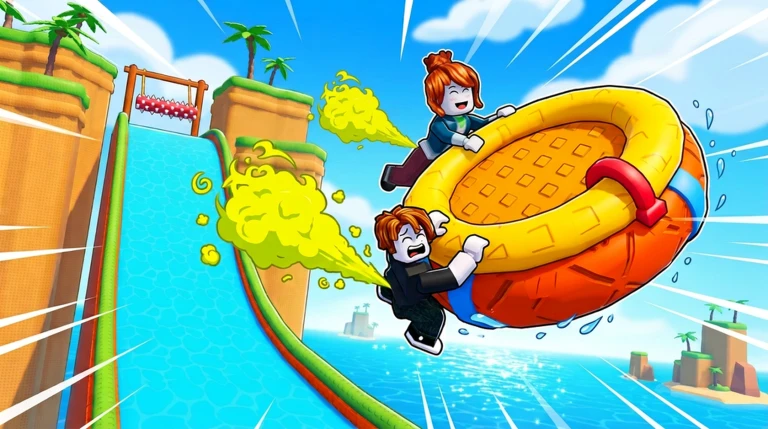
The most important thing to understand in Fart Together is that everyone is controlling the same raft. Your actions do not affect only your character; every movement contributes to the overall direction and momentum of the vehicle.
This makes the game fundamentally different from a normal platformer. You cannot simply move your character around an obstacle independently. If one player pushes in the wrong direction while another player is trying to turn, the combined force can produce an unexpected result.
The raft responds to the direction, timing, and strength of the players' fart-powered movement. Learning this basic physics system should be your first priority before attempting the more difficult sections.
Learn the Effect of Your Movement
Spend some time experimenting with the raft before trying to move quickly through a course. Observe how it reacts when players use their propulsion individually and when several players activate it simultaneously.
Once you understand the relationship between your input and the raft's movement, coordinated navigation becomes much easier.
2. Communicate Before Making Major Moves
Communication can make a huge difference when several players share one vehicle. Since everyone can influence the raft, the team should ideally agree on what it is trying to do before making a major movement.
For example, when approaching a narrow passage, players can decide whether they need to slow down, turn, or push forward. Without communication, different players may attempt different actions at exactly the same time.
Simple callouts are usually enough. A player can announce "left," "right," "slow," or "stop" before the team commits to a maneuver.
Give One Player a Navigation Role
For difficult sections, it can help to have one player act as the primary navigator. This does not mean that only one person should control the raft, but it gives the group a clear voice for deciding the next move.
The navigator can watch the upcoming obstacle while the other players focus on executing the movement. This reduces contradictory inputs and makes teamwork more organized.
3. Avoid Farting at Random
The game's humorous mechanic can make players want to constantly press the movement controls, but uncontrolled propulsion is one of the fastest ways to lose control of the raft.
Every burst can change your trajectory. If the raft is already moving toward a narrow opening, an unnecessary burst can push it away from the correct path.
Instead of thinking about propulsion as something you should constantly activate, treat each burst as a movement decision. Ask whether the raft actually needs more speed, a directional adjustment, or a correction.
Use Short Corrections
Small adjustments are often easier to control than continuous propulsion. If the raft is slightly off course, try making a controlled correction rather than repeatedly activating your movement.
This becomes particularly important near walls, spikes, and narrow passages where even a small change in trajectory can cause a collision.
4. Learn to Control Momentum
Momentum is one of the biggest challenges in a physics-based obstacle course. Even after you stop actively pushing in a particular direction, the raft may continue moving because of its existing momentum.
This means that players need to think ahead rather than reacting only when the raft reaches an obstacle.
When approaching a turn, begin correcting your direction before reaching the corner. Waiting until the raft is directly beside the obstacle may leave insufficient time to change its trajectory.
Brake Before Sharp Turns
Sharp turns require preparation. If the raft is moving too quickly toward a corner, reducing your propulsion before reaching it can make the turn easier.
The objective is not always to move as quickly as possible. Controlled speed gives the team more time to react and correct mistakes.
5. Handle Narrow Passages Carefully
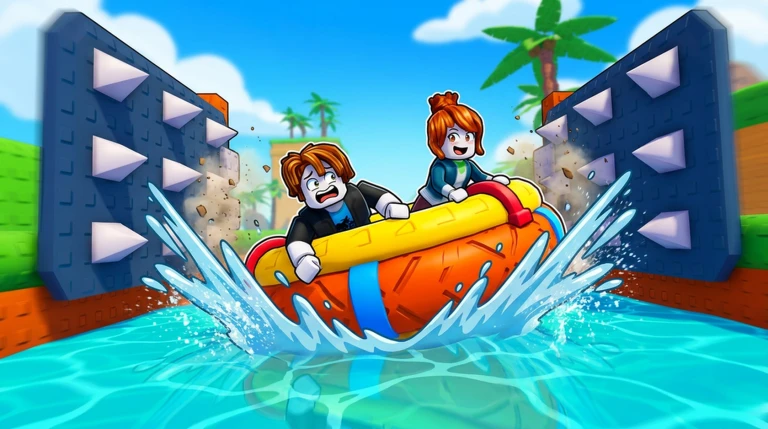
Narrow passages are among the most demanding parts of a physics-based course because there is very little room for correction. A small directional error can cause the raft to hit the surrounding environment.
Before entering a narrow section, try to align the raft as closely as possible with the available path. Avoid entering at an extreme angle unless the course specifically requires it.
Once inside, coordinate your movements carefully. Large directional changes can make the raft bounce between obstacles or become difficult to recover.
Slow Down When Necessary
Speed is not always an advantage. A slower approach gives players more time to observe the path and make small corrections.
If the team repeatedly fails at the same narrow passage, try reducing the amount of propulsion rather than simply attempting the section faster.
6. Watch Out for Moving Obstacles
Moving obstacles require players to pay attention to timing as well as positioning. A path that looks safe one second may become dangerous moments later.
Before committing to a maneuver, observe the obstacle's movement pattern when possible. Determine whether it moves consistently, pauses at certain points, or changes the available route.
The team can then choose an appropriate moment to move through the section instead of rushing into it.
Time Your Movement Together
Coordination becomes especially important when an obstacle opens only briefly. If one player accelerates too early while others are waiting, the raft may enter the wrong position.
Agree on when to move and try to activate your propulsion together. A synchronized push can be much more effective than several independent movements.
7. Use the Environment to Your Advantage
The environment is not simply something you need to avoid. Depending on the course, walls and other structures can affect the raft's movement and may help you understand how to correct your trajectory.
If the raft becomes misaligned, look for opportunities to recover rather than immediately assuming the run is lost. Sometimes a controlled contact with the environment can redirect the raft toward a safer path.
However, this should not become a primary strategy. Deliberately crashing into obstacles can easily make the situation worse, particularly when hazards such as spikes or strong currents are nearby.
Learn From Failed Collisions
When you hit an obstacle, pay attention to what happened. Did the raft approach too quickly? Was the angle incorrect? Did one player apply propulsion at the wrong moment?
Understanding the cause of a collision makes the next attempt more productive.
8. Stay Calm When the Raft Starts Spinning
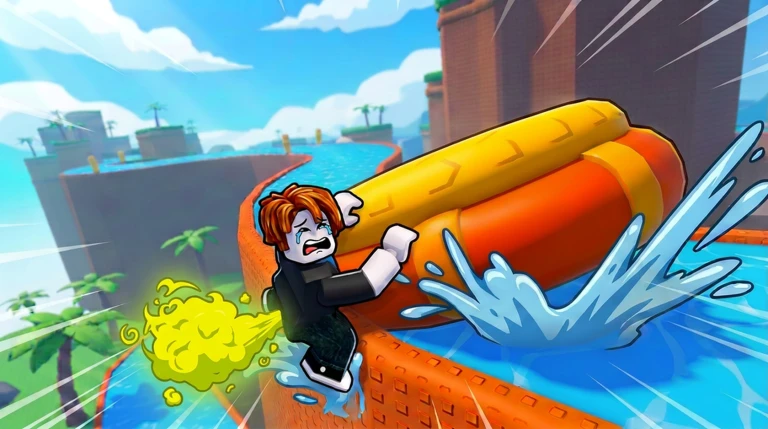
Unexpected spinning is one of the most chaotic situations the team can encounter. When players notice the raft turning uncontrollably, the natural reaction may be to press every movement control at once.
This can make the situation worse.
Instead, communicate and reduce unnecessary inputs. Determine which direction the raft is rotating and identify whether a controlled correction can stabilize it.
Stop Making Contradictory Inputs
If several players are simultaneously trying to correct the raft in opposite directions, the result can become unpredictable.
Choose a direction, communicate it clearly, and make a coordinated correction. Even if the first attempt does not work perfectly, a structured response is usually better than random movement.
9. Treat Every Failed Run as Practice
Fart Together is designed around challenging physics and cooperative mistakes. Failure is therefore part of learning the course rather than simply a sign that the team is playing badly.
When a run fails, discuss what caused it. Was the team moving too quickly? Did someone activate propulsion at the wrong time? Did the group misunderstand an obstacle?
Identifying one specific mistake is more useful than simply restarting and repeating the same approach.
Improve One Problem at a Time
If a course has several difficult sections, do not try to completely change your strategy after every failure.
Focus on one problem. Once the team can consistently handle that section, move on to the next challenge.
This gradual approach allows players to develop a shared understanding of the course and improve their coordination naturally.
10. Build a Consistent Team Strategy
The strongest teams are not necessarily the ones with the fastest reflexes. They are the ones that develop a consistent way of communicating and controlling the raft.
Assigning simple responsibilities can help. One player can focus on navigation, while others concentrate on applying propulsion and watching for hazards.
As the team becomes more familiar with the physics, these roles can become less formal. Eventually, players will begin anticipating one another's movements and making coordinated adjustments naturally.
Keep the Atmosphere Fun
Fart Together is deliberately built around comedy and cooperative chaos. The game can turn a simple obstacle into a hilarious failure, especially when everyone knows exactly which movement caused the disaster.
Do not let repeated failures destroy the experience. Laugh at mistakes, identify what went wrong, and try again with a slightly better plan.
The goal is not simply to finish every course perfectly. The shared experience of trying, failing, and eventually succeeding is a major part of what makes the game entertaining.
Conclusion
Fart Together takes a simple idea and turns it into a challenging cooperative physics experience. Two to four players share control of the same raft, using fart-powered movement to navigate obstacle courses filled with narrow passages, sharp turns, moving hazards, and difficult terrain.
The key to success is coordination. Communicate before major movements, avoid unnecessary propulsion, learn how momentum works, and slow down when approaching difficult sections. When something goes wrong, stay calm and identify the reason instead of reacting randomly.
Most importantly, treat every failed run as useful practice. Once your team develops consistent communication and learns how the raft responds to combined inputs, difficult sections become much more manageable. And when the raft finally reaches the finish after several chaotic attempts, the victory becomes even more satisfying.